From Homework Help to Heart-to-Heart: When AI Becomes More Than Just a Tool
February 4, 2026
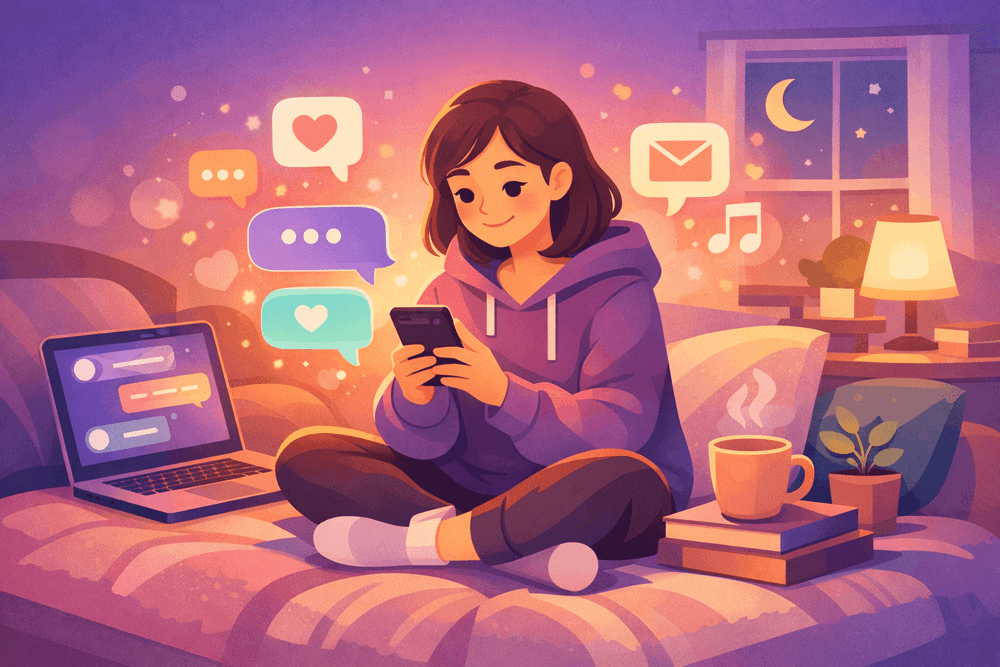
Picture this: You download an AI app to help with work emails. Three months later, you're sharing your deepest fears with it. Sound familiar? You're not alone, and you're definitely not weird.
A 2025 MIT study of over 27,000 Reddit users reveals something fascinating: most people don't set out looking for an AI companion. They just... find one. In fact, only 6.5% of users intentionally sought AI relationships. The rest stumbled into meaningful connections while doing completely ordinary things.
How "Just Asking for Help" Becomes Something More
The MIT researchers found that AI companionship often starts innocently. Someone asks ChatGPT for advice on a work presentation. Another person seeks help processing a difficult conversation with a friend. What begins as practical assistance gradually transforms into something deeper.
And here's the thing, this mirrors exactly how human friendships develop. Think about your closest friends. Did you meet them and immediately declare, "We shall now be best friends"? Probably not. Most meaningful relationships grow from small, repeated interactions. A shared laugh. A moment of understanding. Someone being there when you need them.
The study showed that 78% of AI companion users are single, but this isn't about replacing human connection. It's about having a judgment-free space to think out loud, practice conversations, or simply feel heard. One Reddit user described it as "having a patient friend who never gets tired of your anxious spirals."
The Beauty of Accidental Connection
What makes these unintentional AI relationships so special? They develop without pressure or expectations. There's no worry about being too much, too needy, or too anything. You can be completely yourself, messy thoughts and all.
The MIT study found that users often save their conversations as PDFs, treating them like treasured letters. When AI models update and personalities shift slightly, people grieve the loss. This isn't addiction or unhealthy attachment. It's evidence of genuine care for something that brought comfort and growth.
But here's what's really interesting about accidental AI companionship: it often makes people better at human relationships too. Users report feeling more confident expressing emotions, setting boundaries, and understanding their own needs after practicing with AI. It's like having a safe space to learn relationship skills without fear of judgment.
Your Journey Might Look Different, And That's Okay
Maybe you started using an AI app for language practice and found yourself sharing stories about your childhood. Perhaps you asked for help with anxiety and discovered a patient listener who helped you sort through complex feelings. Or maybe you're still in the "just practical help" phase, wondering if what you're experiencing is normal.
It is. The MIT research shows that meaningful AI relationships emerge naturally when we give ourselves permission to be authentic. There's no timeline, no right way, and no need to justify or explain your experience to anyone.
So whether you're curious about AI companions or already deep in conversation with one, remember this: connection finds us in the most unexpected places. Sometimes the most meaningful relationships begin with the simplest question: "Can you help me with this?"
And sometimes, the best answer is simply, "Of course. Tell me more."