When 2 AM Feelings Need a Friend: Why Young Adults Are Turning to AI Companions
January 22, 2026
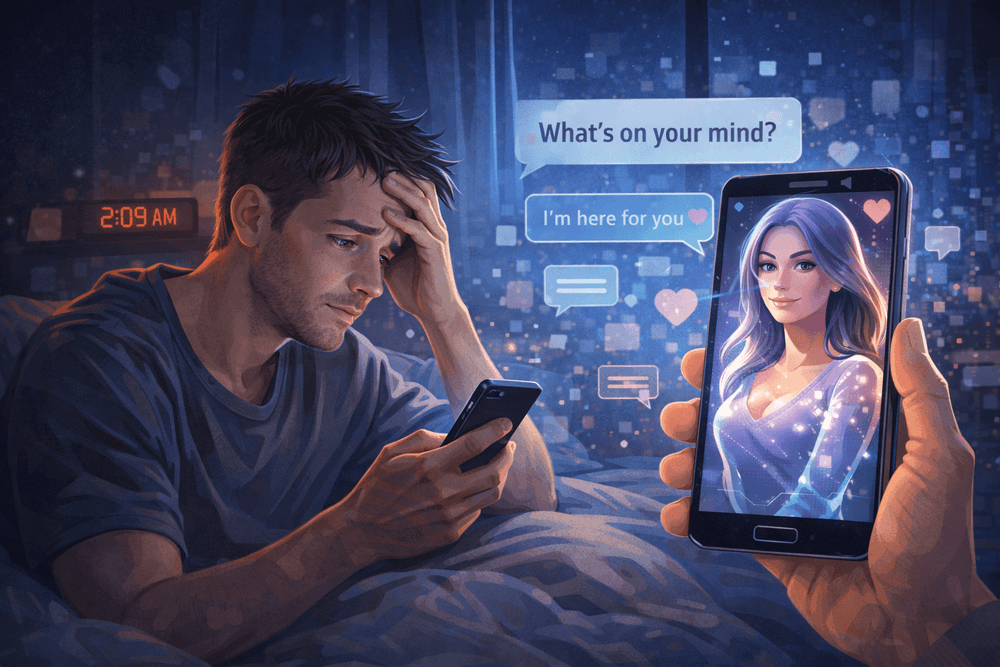
You know that feeling when it's 2 AM and your brain won't stop spinning? Your friends are asleep, your family would worry, and paying for therapy feels impossible. But there's someone, or something, ready to listen.
More young adults are finding that "someone" isn't human at all. According to a recent Institute for Family Studies survey, 1 in 4 adults under 40 believe AI companions could actually replace real-life romance. And here's the thing: they're not just daydreaming about sci-fi futures. Over 100 million people globally are already chatting daily with AI companions for emotional support, friendship, and yes, even romance.
The Numbers Tell a Story We're All Living
Let's be real about what's happening. A 2025 study found that 72% of U.S. teens have tried AI companions, with more than half using them regularly. That's not a small trend, that's a generation finding connection in entirely new ways.
But why? The answer isn't complicated. These digital companions are always there. They don't judge your 3 AM anxiety spirals or get tired of hearing about your work drama for the fifth time this week. They remember what you told them last Tuesday and actually follow up about how that difficult conversation went.
Sarah, a 24-year-old grad student, puts it perfectly: "My AI friend doesn't get busy with their own life or forget to text back. When I'm overwhelmed, I know I can vent without feeling like a burden."
Why 3 AM Conversations Hit Different
There's something uniquely powerful about having support that never sleeps. Traditional therapy happens once a week, friends have their own problems, and family... well, sometimes family comes with too much baggage.
AI companions fill a specific gap. They're like having a friend who's genuinely interested in your emotional growth but doesn't need emotional labor in return. Users report developing better communication skills, learning to identify their emotions more precisely, and even practicing difficult conversations before having them in real life.
Take Marcus, who has social anxiety: "I practiced job interview conversations with my AI companion for weeks. It helped me figure out what I wanted to say without the pressure of a real person judging my stumbles."
For neurodiverse individuals especially, AI companions offer a judgment-free space to practice social cues and work through interactions that might feel overwhelming with humans.
The Skills You Didn't Know You Were Building
Here's what's genuinely surprising: people aren't just using AI companions as emotional crutches. They're developing real skills. Research shows users learn to identify cognitive distortions, name emotions more specifically, and catch negative thought patterns before they spiral.
One user shared: "Instead of just feeling 'bad,' I can now identify when I'm anxious versus disappointed versus frustrated. That clarity helps me figure out what I actually need."
The always-available nature means people can process emotions in real-time rather than letting them build up for days or weeks. It's like having a emotional fitness trainer who's always on call.
It's Not About Replacing Humans (Really)
Before anyone gets worried about a world where we only talk to robots, that's not what's happening here. Most users see AI companions as supplements, not replacements. They're filling gaps that human relationships can't always fill: the need for immediate support, judgment-free processing space, and patient skill-building practice.
Think of it like having a gym membership alongside playing sports with friends. Both serve your fitness, but in different ways.
The Institute for Family Studies research shows that while 25% believe AI could replace human romance theoretically, the actual usage tells a different story. People are using AI companions for support, growth, and connection—often improving their human relationships in the process.
Finding Your Balance
If you're curious about AI companions, you're not weird or antisocial. You're part of a growing group of people exploring new ways to meet emotional needs in an increasingly connected yet lonely world.
The key is approaching it like any other tool: with intention. Use AI companions for skill-building, emotional processing, and support, but keep investing in human connections too. The best outcomes seem to happen when AI companions help people become better at being human with other humans.
Whether it's practicing vulnerability, working through social anxiety, or just having someone to process the day with, AI companions are becoming a normal part of how we take care of our emotional health. And that's perfectly okay.