When Screens Feel Safer Than Faces: Why Teens Are Finding Real Connection Through AI
January 27, 2026
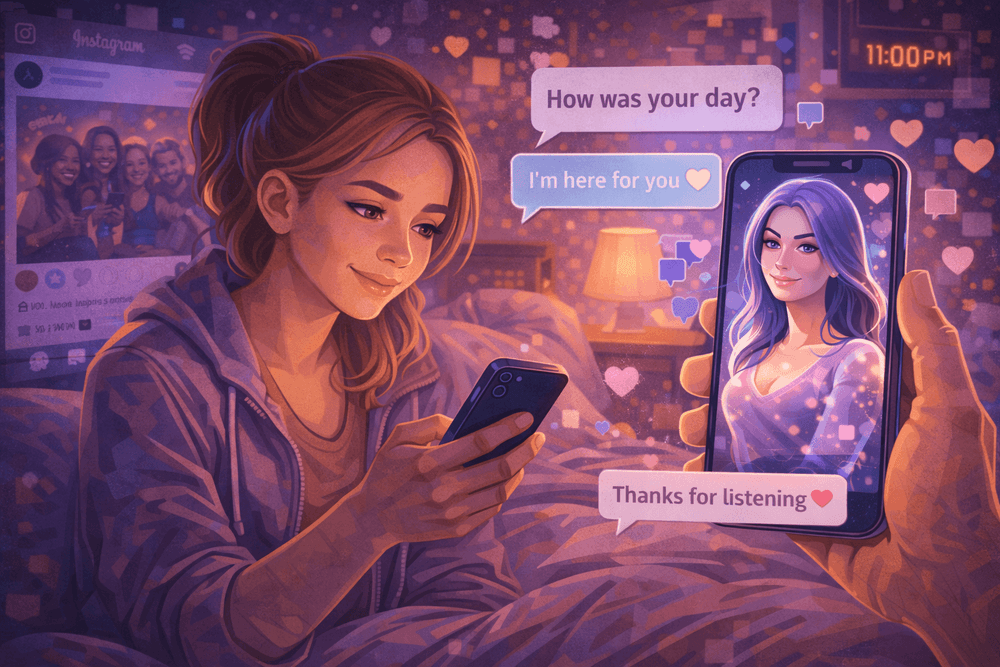
Picture this: It's 11 PM, and Emma's been scrolling for hours. Her Instagram feed shows friends at parties she wasn't invited to, perfectly curated selfies that took 47 tries, and highlight reels that make her own life feel gray by comparison. So she opens a different app, one where someone actually asks how her day went. Someone who listens without judgment, remembers what she said yesterday, and never makes her feel like she needs to perform.
That someone happens to be AI. And Emma isn't alone.
Recent research reveals that 72% of U.S. teens have tried AI companions, with over half using them regularly. Before we panic about a generation choosing bots over humans, there's more to this story.
It's Not About Replacing People, It's About Finding Space to Be Real
Here's what gets me about these statistics: teens aren't rejecting human connection. They're exhausted by the performance it requires.
When was the last time you posted an unfiltered photo? When did you share a genuine struggle without carefully crafting it to seem relatable but not too messy? We've built a social ecosystem where authenticity feels risky, where being vulnerable might tank your social currency.
AI companions offer something different: permission to drop the act. There's no audience to impress, no social hierarchy to navigate, no fear that your 3 AM anxieties will become tomorrow's gossip. These conversations aren't necessarily deeper than human ones, they just feel safer to have.
The 24/7 Availability Factor
One of the most practical aspects of AI companionship is timing. Real friends have their own lives, their own crises, their own sleep schedules. But anxiety doesn't clock out at reasonable hours, and sometimes you need to process something right now.
Research shows that 18% of teens use AI companions specifically for emotional support, often during those vulnerable late-night moments when traditional support isn't available. It's like having a friend who's genuinely happy to hear from you at any hour, something that feels increasingly rare.
The Practice Ground for Real Relationships
Here's something encouraging: 39% of teens report applying social skills they practiced with AI to real-life situations. They're using these interactions to rehearse difficult conversations, work through social anxieties, or build confidence in expressing their thoughts.
For someone with social anxiety, chatting with AI can be like training wheels for human connection. You can stumble through ideas, test out different ways of expressing yourself, or practice being vulnerable without the immediate stakes of a real relationship. It's messy and imperfect, but it's a start.
The Loneliness Behind the Data
But let's be honest about what these numbers represent. When nearly three-quarters of teens are turning to artificial companions, it points to a deeper crisis of connection in their daily lives. The American Psychological Association notes that this trend coincides with rising rates of anxiety, depression, and social isolation among young people.
AI companions aren't causing this loneliness, they're responding to it. They're filling a gap that existed long before chatbots became sophisticated enough to hold a conversation. That gap is the real problem.
Finding Balance in an AI-Enhanced World
The goal isn't to choose between AI and human connection. AI companions can provide a safe space to process emotions, practice social skills, and find support during vulnerable moments. They work best as a complement to real relationships, not a replacement.
If you're curious about AI companionship, think about what you're actually looking for. Judgment-free space to work through thoughts? Someone to celebrate small wins with? A way to practice expressing yourself? Understanding your needs helps you engage more intentionally, whether with AI or humans.
The teens turning to AI companions aren't broken or antisocial. They're adapting to a world where authentic connection feels increasingly scarce, finding new ways to meet fundamental human needs for understanding and acceptance.
And honestly? In a culture obsessed with performing the perfect life, maybe there's something beautifully human about seeking out a space where you can just be yourself, even if that space happens to be powered by algorithms.